
Finding the perfect ring is exciting, whether you’re buying an engagement ring, wedding band, anniversary gift, or simply treating yourself. However, one small mistake can turn an exciting purchase into a frustrating experience—the wrong ring size.
Many people assume they need to visit a jewelry store to determine their ring size, but that’s no longer true. With a few household items and the right technique, you can accurately measure your ring size from the comfort of your home.
In this complete guide, you’ll learn several easy methods to measure your ring size, common mistakes to avoid, expert tips from jewelers, and answers to frequently asked questions.
Why Ring Size Matters
A ring should feel comfortable throughout the day. It shouldn’t be so tight that it becomes painful or impossible to remove, nor so loose that it slips off your finger.
Choosing the correct ring size offers several benefits:
- Comfortable everyday wear
- Prevents accidental loss
- Reduces resizing costs
- Makes online jewelry shopping easier
- Ensures engagement and wedding rings fit perfectly
A properly fitted ring should slide on easily but require slight resistance when removing it over the knuckle.
Things You’ll Need
Before measuring your finger, gather a few simple items:
- A thin strip of paper or a piece of string
- A ruler with millimeter markings
- A pen or pencil
- A printable ring size chart (optional)
- A ring that already fits you (optional)
These everyday items are enough to help you determine an accurate ring size.
Method 1: Measure Your Finger with Paper or String
This is one of the easiest and most popular ways to measure ring size at home.
Step 1: Cut a Thin Strip
Cut a strip of paper about 6 inches long and approximately 5 mm wide.
If you’re using string, choose one that doesn’t stretch.
Step 2: Wrap Around Your Finger
Wrap the paper around the base of the finger where you’ll wear the ring.
Make sure it’s snug but not overly tight.
Step 3: Mark the Meeting Point
Use a pen to mark where the paper overlaps.
Step 4: Measure the Length
Lay the paper flat and measure the length in millimeters using a ruler.
Step 5: Compare with a Ring Size Chart
Use the circumference measurement to determine your ring size.
Example:
- 49 mm = US Size 5
- 52 mm = US Size 6
- 54 mm = US Size 7
- 57 mm = US Size 8
- 60 mm = US Size 9
- 62 mm = US Size 10
- 65 mm = US Size 11
- 68 mm = US Size 12
Always verify with the sizing chart provided by your jeweler.
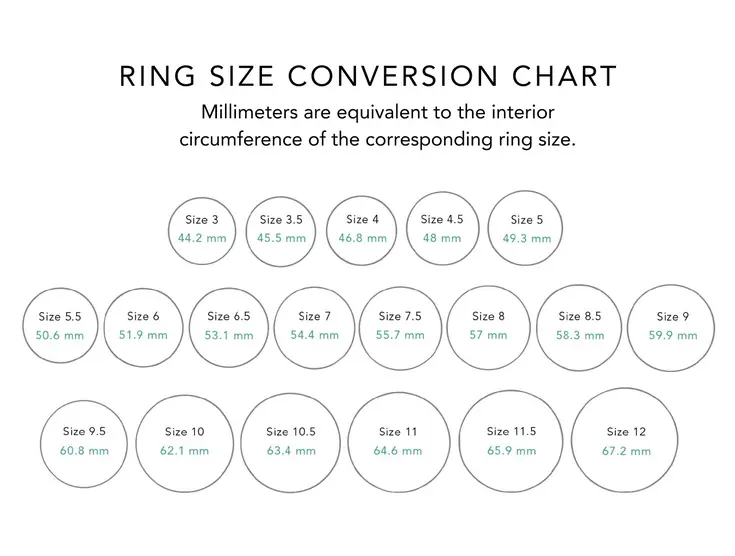
Method 2: Measure a Ring You Already Own
If you already have a ring that fits perfectly, this method can be even more accurate.
Steps
- Place the ring on a ruler.
- Measure the inside diameter.
- Compare the diameter with a ring size chart.
Approximate measurements:
- 15.7 mm = US Size 5
- 16.5 mm = US Size 6
- 17.3 mm = US Size 7
- 18.1 mm = US Size 8
- 18.9 mm = US Size 9
- 19.8 mm = US Size 10
This method works especially well if you’re buying another ring for yourself.
Method 3: Use a Printable Ring Size Chart
Many jewelers provide printable ring sizing guides.
Simply:
- Print the chart at 100% scale.
- Place your existing ring over the printed circles.
- Match the inside edge to the closest circle.
This is one of the quickest ways to find your ring size if you already own a ring.
Method 4: Use a Ring Sizer Tool
For the highest accuracy, consider purchasing an inexpensive plastic ring sizer or finger measuring tool.
These tools are affordable, reusable, and commonly used by professional jewelers. If you shop for rings frequently, they’re a worthwhile investment.
Best Time to Measure Your Finger
Believe it or not, your finger size changes throughout the day.
For the most accurate result:
- Measure in the evening.
- Measure when your hands are at normal body temperature.
- Avoid measuring after exercise.
- Don’t measure when your hands are very cold.
- Avoid measuring immediately after consuming very salty foods.
Temperature and hydration can temporarily affect finger size.
Measure More Than Once
Professional jewelers often recommend measuring your finger at least three times on different days.
If you get slightly different results, choose the average measurement or consult a jeweler before placing your order.
Ring Width Can Affect the Fit
Not all rings feel the same.
A thin band usually feels slightly looser, while a wide band covers more of your finger and often feels tighter.
If you’re buying a band wider than 6 mm, many jewelers recommend going up by half a size for added comfort.
Consider Your Knuckle Size
Some people have larger knuckles than the base of their finger.
In that case:
- Ensure the ring can slide over the knuckle.
- It should still fit securely once it reaches the base of your finger.
If the difference is significant, speak with a jeweler about comfort-fit designs or resizing options.
Common Mistakes to Avoid
Even a small measuring error can lead to the wrong ring size. Avoid these common mistakes:
- Pulling the string too tightly
- Using stretchy thread or elastic
- Measuring swollen fingers
- Measuring cold fingers
- Ignoring your knuckle size
- Using an inaccurate ruler
- Measuring only once
Taking a little extra time can save you the hassle of exchanging or resizing your ring later.
International Ring Size Differences
Ring sizes vary by country.
For example:
- United States and Canada use number sizes (5, 6, 7, 8, etc.).
- The United Kingdom uses letters.
- Europe typically uses circumference in millimeters.
- Japan uses a different numeric system.
If you’re ordering from an international jewelry store, always check the brand’s size conversion chart before purchasing.
Tips for Buying a Ring as a Surprise
Planning a surprise proposal or gift? Here are a few ways to estimate someone’s ring size:
- Borrow a ring they already wear (on the correct finger).
- Trace the inside of the ring on paper.
- Press the ring into a bar of soap or clay to capture its size.
- Ask a close friend or family member if they know the size.
- Consider choosing a ring that can be resized if you’re unsure.
These methods can help you keep the surprise while improving your chances of getting the fit right.
What If You Choose the Wrong Size?
Don’t panic.
Many gold, platinum, and silver rings can be resized by a professional jeweler.
However, some designs are more difficult or impossible to resize, including:
- Eternity bands
- Certain tension-set rings
- Some tungsten and titanium rings
Before purchasing, check the jeweler’s resizing policy.
Expert Tips for Accurate Ring Sizing
- Measure your finger two or three times.
- Use millimeters instead of inches for greater accuracy.
- Compare results using two different methods.
- Measure both hands if applicable—your dominant hand is often slightly larger.
- If you’re between two sizes, many jewelers recommend choosing the larger size for comfort.
Final Thoughts
Measuring your ring size at home is easier than ever. With a strip of paper, a ruler, or an existing ring, you can get a reliable estimate in just a few minutes.
Remember to measure at the right time of day, account for your knuckle size, and double-check your results before placing an order. These small steps can make a big difference, helping you enjoy a ring that fits comfortably and securely.
Whether you’re shopping for an engagement ring, wedding band, or a special gift, taking the time to find the correct ring size will make your purchase much more enjoyable.
Frequently Asked Questions (FAQs)
1. Can I measure my ring size without visiting a jeweler?
Yes. You can use paper, string, a ruler, a printable ring size chart, or a ring sizer tool to estimate your size accurately at home.
2. What is the most accurate way to measure ring size at home?
Using a ring sizer tool or measuring an existing ring that fits well generally provides the most accurate results.
3. Should my ring fit tightly?
No. A ring should slide on comfortably and come off with slight resistance over the knuckle.
4. Why does my ring feel tighter in the evening?
Your fingers naturally expand slightly throughout the day due to temperature, activity, and fluid retention.
5. What should I do if I’m between two ring sizes?
If you’re between sizes, especially for wider bands, choosing the larger size often provides a more comfortable fit.
6. Can all rings be resized?
No. While many gold, silver, and platinum rings can be resized, some materials and designs—such as eternity bands, tungsten, and titanium rings—may have limited or no resizing options.
7. How often should I check my ring size?
If you’ve experienced significant weight changes, pregnancy, or health-related swelling, it’s a good idea to remeasure your finger before buying a new ring.